The 5 Types of Stainless Steel: A Complete Selection Guide
Stainless steel is more than just a "rust-proof" metal. In the engineering world, it is divided into 5 main families based on its metallurgical structure, which significantly impacts its hardness, magnetic properties, and price. In this article, Trinity Dynamic will guide you through each type to help you select the most cost-effective and technically appropriate material for your project.
Comparison Table: Strengths and Limitations
| Family | Magnetic? | Key Advantages | Limitations |
|---|---|---|---|
| 1. Austenitic | No | Excellent corrosion resistance, highly formable, easily weldable. | Higher cost (due to Nickel), lower hardness than Martensitic. |
| 2. Ferritic | Yes | Cost-effective, good corrosion resistance in normal environments. | Harder to form and weld compared to Austenitic. |
| 3. Martensitic | Yes | Extremely hard, wear-resistant, can be heat-treated. | Lowest corrosion resistance, relatively brittle. |
| 4. Duplex | Yes | High strength + Excellent seawater resistance. | High cost, difficult to form due to its extreme hardness. |
| 5. PH | Yes | The strongest stainless steel available. | Very high cost, complex manufacturing process. |
1. Austenitic - The King of Stainless Steel
This family dominates over 70% of the global market. The addition of Chromium (18%) and Nickel (8%) creates a stable, durable, and highly flexible structure.
- Key Properties: Non-magnetic, performs well in extreme temperatures, excellent weldability.
- Recommended Grades:
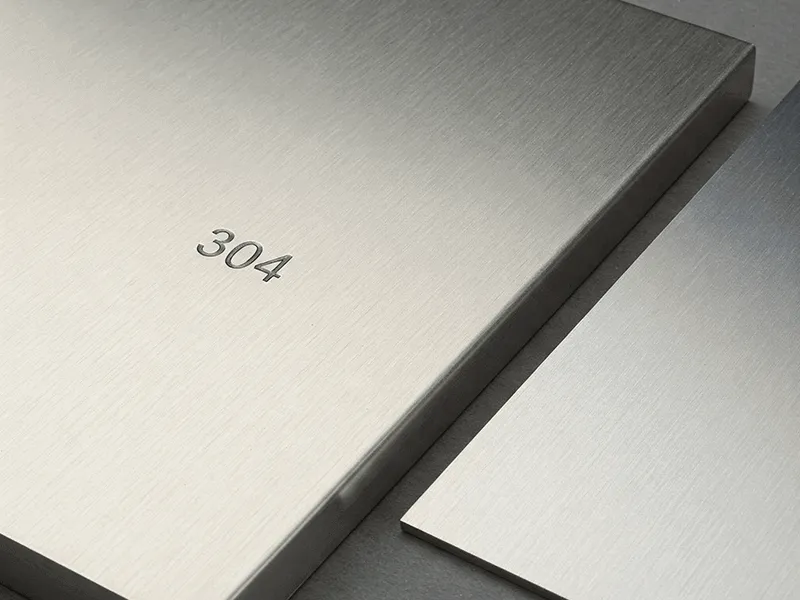
- 304 / 304L: General use, water tanks, and food processing.
- 316 / 316L: Coastal environments and chemical handling.
- 310S: High-temperature applications (e.g., industrial ovens).
2. Ferritic - The Cost-Effective Alternative
High in Chromium but low in Carbon, and typically contains no Nickel. This makes it more affordable while maintaining good corrosion resistance in standard environments.
- Key Properties: Magnetic, budget-friendly, superior resistance to Stress Corrosion Cracking (SCC) compared to 304.
- Recommended Grades:
- 430: Home appliances, budget sinks, and interior trims.
- 409: Automotive exhaust systems.
3. Martensitic - Hard and Sharp
Focused on hardness, this family has high Carbon content similar to carbon steel, allowing it to undergo Heat Treatment.
- Key Properties: Hard and tough, highly wear-resistant, magnetic.
- Recommended Grades:
- 420J2: Knives, surgical instruments, and machine shafts.
- 440C: High-quality bearings and valves.
4. Duplex - Stronger and Tougher
A hybrid of Austenitic and Ferritic structures. The dense molecular arrangement provides a Yield Strength twice as high as Grade 304.
- Key Properties: Outstanding resistance to pitting corrosion and seawater.
- Recommended Grades: 2205, 2507 (Super Duplex)
- Applications: Oil rigs, high-pressure chemical tanks, boat propellers.
5. Precipitation Hardening (PH) - The Engineering Pinnacle
Specialty grades that achieve ultimate hardness through an aging process, offering the highest tensile strength among all stainless steels.
- Recommended Grades: 17-4PH (630)
- Applications: Aerospace components, speedboat shafts, nuclear equipment.
Choosing the Right Grade Saves Money
Not sure whether you need 304, 316, 430, or a specialty grade? Consult with Trinity Dynamic's experts to get the best material recommendation and pricing for your project.
Consult Our Experts