Stainless 304 vs 316: The Ultimate Cost & ROI Comparison Guide
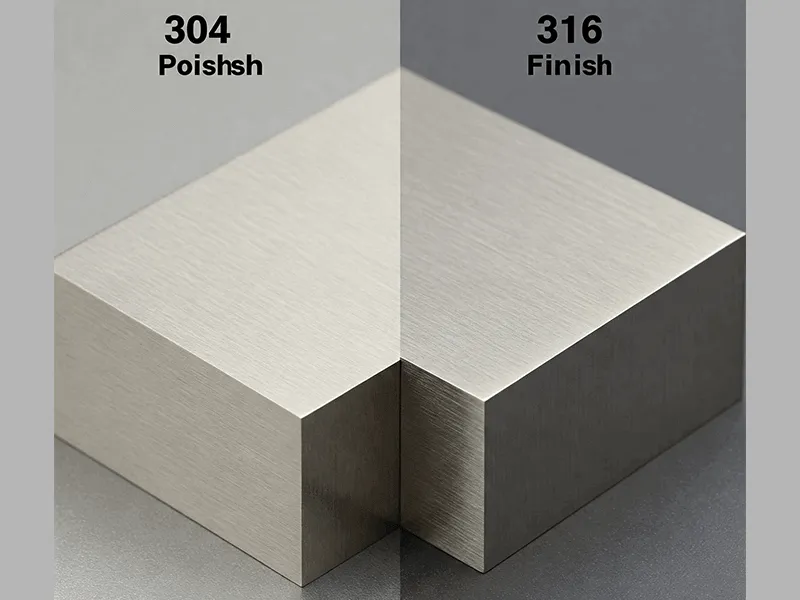
If you are reviewing a material quotation and hesitating whether to pay the premium for Grade 316 or stick with the standard Grade 304, this article is for you. Trinity Dynamic skips the heavy academic jargon and provides a "Practical Checklist" to help you secure the exact specifications you need while maximizing your project's budget.
The 3-Question Checklist: Answer "Yes" or "No"
Evaluate your project environment against these three critical questions:
- Is the installation site near the ocean (within a 5 km radius)?
- Will the material be in direct contact with harsh chemicals, acids, or high concentrations of salt?
- Is the material located in a highly humid, poorly ventilated indoor area (e.g., indoor swimming pools or cold storage)?
The Verdict:
- If you answered "Yes" to even one question: You must specify Grade 316 / 316L to guarantee structural safety against pitting corrosion.
- If you answered "No" to all questions: Grade 304 is more than sufficient. Choosing 304 will instantly save you 20% to 40% on material costs.
"Value for Money" (ROI) Comparison Table
Beyond tensile strength, engineers and procurement managers must account for long-term lifecycle costs:
| Material Grade | Rust Resistance | Cost-Efficiency (ROI) | Estimated Lifespan |
|---|---|---|---|
| Stainless 304 | Excellent (Standard conditions) | Outstanding (Highly economical) | 25 - 50+ Years |
| Stainless 316 | Maximum (Chemical/Marine) | Moderate (Premium price) | 50 - 100+ Years |
Engineering Insight: Why is Grade 316 More Expensive?
The primary reason 316 Stainless Steel Plates command a higher price is the addition of 2-3% Molybdenum. Molybdenum is a rare and expensive alloying element, but it is the "hero" that rapidly repairs the passive oxide layer when attacked by chlorides (salt).
If your application involves Heat Exchanger Tubes or chemical vats, paying the premium for Molybdenum is an absolute necessity that prevents millions in future leakage and repair costs.
Don't Order the Wrong Suffix! (304 vs 304L)
- 304 / 316 (Standard): Contains slightly higher carbon, offering excellent Yield Strength. Best for bolted structures and general fabrication.
- 304L / 316L (Low Carbon): The "L" stands for Low Carbon. This is mandatory for welding applications and structural assemblies using Angle Bars, as it prevents weld decay (Intergranular Corrosion).
So... Which Grade Should You Buy?
Don't rely solely on comparison tables! Let Trinity Dynamic's technical experts analyze your specific job site. Whether you need cost-effective 304 or premium 316L, we have the stock and the knowledge to secure the best deal for you.
Consult Sales & Request a Quote