Decoding the "L": What’s the Difference Between 304 vs 304L and 316 vs 316L?
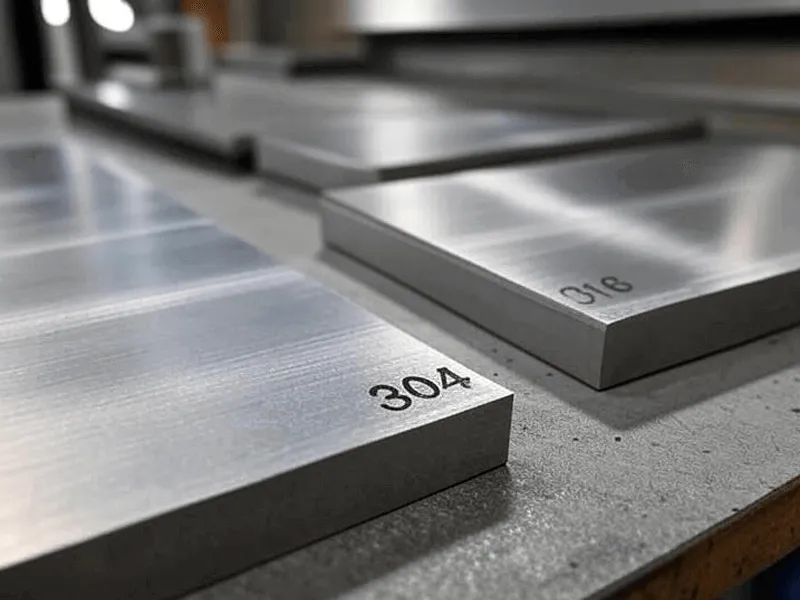
Many people know that Grade 316 resists rust better than Grade 304. But when it’s time to purchase, you might encounter grades with an "L" suffix, such as 304L or 316L. What does this 'L' stand for? Is it worth the extra cost? And which one should you choose for welding projects? Trinity Dynamic clears up the confusion in this detailed guide.
What Does "L" Mean? Why Do Welders Love It?
The letter L stands for "Low Carbon." It indicates that the stainless steel grade has a strictly controlled, lower carbon content (less than 0.03%), whereas standard 304/316 can contain up to 0.08% carbon.
Why Reduce Carbon? (Preventing Weld Decay)
When stainless steel is subjected to the high heat of welding, the carbon combines with chromium to form "chromium carbides." This depletes the chromium near the weld seam, causing a loss of rust resistance known as Weld Decay (Intergranular Corrosion). Lowering the carbon content directly prevents this issue.
Clear Comparison: Standard vs. L-Grades
1. Stainless Steel 304 vs 304L
- 304 (Standard): The versatile standard grade. Strong and durable, suitable for forming, water tanks, kitchenware, or structures that do not require heavy welding.
- 304L (Low Carbon): Designed specifically for welding applications. Ideal for large industrial tanks or welded frameworks, ensuring the welded joints remain corrosion-resistant long-term.
2. Stainless Steel 316 vs 316L
- 316 (Standard): Contains Molybdenum for excellent resistance to salt and chemicals. However, heavy welding can still make the seams vulnerable to corrosion.
- 316L (Low Carbon): The absolute industry standard for Piping Systems and Pressure Vessels in chemical and marine environments, where seamless, corrosion-free welds are critical.
*Heavy industrial products like our A312 Welded Pipes and No.1 Hot Rolled Plates are typically supplied in 304L/316L grades to ensure maximum performance.
What Does "Dual Certified" Mean?
With modern advancements in metallurgy, leading steel mills can now produce stainless steel that has both low carbon (the "L" spec) for weldability and added nitrogen to maintain the yield strength of standard grades.
As a result, you will often see Mill Test Certificates (MTC) indicating "304/304L" or "316/316L". This means the material is "Dual Certified"—it provides the excellent weldability of the L-grade while meeting the structural strength requirements of the standard grade, offering the best value for your project.
Summary: How to Choose the Right Spec?
| Application / Environment | Recommended Grade |
|---|---|
| General use, pressing/forming, kitchenware, bolted assemblies | 304 |
| Heavy welding projects, large industrial tanks | 304L |
| Coastal areas, salt exposure (Bolted structures, no welding) | 316 |
| Chemical plants, pipelines, welding in highly corrosive areas | 316L (Highly Recommended) |
Need 304L or 316L Stainless Steel?
Trinity Dynamic primarily stocks Dual Certified (304/304L and 316/316L) plates and pipes to ensure our clients receive the best of both worlds: superior strength and flawless weldability.
Check Stock & Get a Quote