Stainless Steel Checker Plate Guide: 5-Bar vs. Diamond Pattern
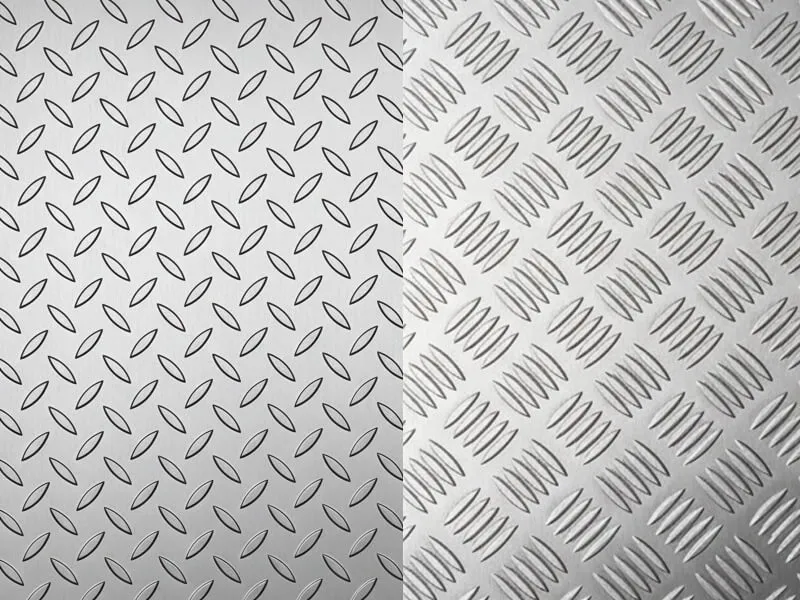
In high-risk operational areas—such as food processing plants with wet floors, oil-slicked manufacturing lines, or marine walkways—choosing the right flooring material is an uncompromising safety priority. Stainless Steel Checker Plate (Tread Plate) is the ultimate engineering solution. In this guide, Trinity Dynamic explores the differences in anti-slip patterns and how to select the right grade for your facility.
5-Bar (Tear Drop) vs. Diamond Pattern: Which to Choose?
While both patterns offer excellent slip resistance, they serve slightly different architectural and functional purposes according to international standards:
| Design Aspect | 5-Bar Pattern (Tear Drop) | Diamond Pattern |
|---|---|---|
| Visual Characteristics | Groups of 5 raised bars arranged in alternating directions. | A continuous, uniform pattern of single diamond-shaped raised studs. |
| Anti-Slip Performance | Maximum Grip in all directions (multidirectional friction). | Excellent grip with a more uniform, decorative appearance. |
| Common Applications | Heavy industrial floors, loading docks, truck beds. | Architectural features, showcase stair treads, elevator floors. |
| ASTM Reference | ASTM A793 Pattern B | ASTM A793 Pattern A |
Why Upgrade to "Stainless Steel" over Mild Steel or Aluminum?
Major infrastructure projects specify Stainless Steel Tread Plates, despite the higher initial cost, due to these long-term ROI factors:
GMP/HACCP Food Grade Standard
Unlike mild steel, it won't rust or flake, and it withstands harsh chemical washdowns. It is the only approved flooring material for strict Food and Pharmaceutical plants.
Extreme Mechanical Strength
The robust material structure can continuously support the heavy concentrated loads of forklifts and heavy machinery without yielding (far superior to aluminum plates).
*Pro Tip: If installing in chemical zones or near coastal areas, explicitly specify Grade 316L to prevent pitting corrosion.
Standard Weight Chart: Stainless Checker Plate (Grade 304)
Weight calculations are critical for structural engineers determining dead loads. (For flat sheet calculations, see our Stainless Weight Calculation Guide).
| Base Thickness (mm) | Weight: 4' x 8' (kg/sheet) | Weight: 5' x 10' (kg/sheet) |
|---|---|---|
| 2.0 mm | 52.30 | 81.70 |
| 3.0 mm | 76.00 | 118.70 |
| 4.5 mm | 111.40 | 174.10 |
| 6.0 mm | 146.90 | 229.50 |
*Note: Weights are approximations. Slight variations occur depending on the specific pattern height produced by the mill.
3 Insider Tips for Procurement
- Specify "Base Thickness": Ensure quotes reflect the thickness of the flat base plate, not the overall thickness including the raised pattern. This prevents suppliers from delivering under-specced materials.
- Optimize Width: For truck beds or long walkways, utilizing 5-foot (1524 mm) wide plates reduces the number of welded seams, enhancing structural integrity.
- Demand the MTC: Always verify the Mill Test Certificate to guarantee you are receiving genuine 304 or 316L, particularly for government or audited corporate projects.
Require High-Quality Stainless Checker Plates?
Trinity Dynamic stocks premium 304 / 316L Checker Plates in both 5-Bar and Diamond patterns. With our advanced CNC machinery, we provide precision laser cutting and bending to match your exact CAD drawings.
Check Inventory & Request a Quote